




FieldNotes
Our daily Field Notes email is just the kind of jumpstart you need. A fast read. Maybe less than a minute. Because sometimes it just takes one insight to change the trajectory of the day.

Search Field Notes
-
When to Take a Bigger Risk
Taking a big risk is never a light decision. By definition, a risk is a chance with both a great upside and downside. But by looking for distinct advantages others haven’t realized yet, a bigger risk can be a wickedly smart call. That’s a risk you can’t afford to miss.
-
Good Leaders Don’t Allow Meeting Spectators
Once an expectation is set that no one can sit passively or remain silent during team meetings, the group benefits from different perspectives and viewpoints that otherwise would have been withheld. Asking everyone to contribute, share their ideas, and become fully involved in the discussion is what good leaders do through their Socratic questioning. There…
-
Who Are You Giving a Halo To?
Good leaders remain vigilant against any distortion that colors their objective view, especially a bias that influences how they judge people. They fight off the halo effect by always viewing people as multifaceted, with both positive and negative traits and qualities. They refrain from judging people as a single entity, preferring instead to evaluate their…
-
Turning Problems Into Opportunities
What makes a problem a problem? A problem always contains two parts: One-half of a problem is an expectation or desire for a different reality or outcome. What would we like to see or experience? The second half is the reality that conflicts with that expectation or desire. For instance, if a leader wants the…
-
Words That Are Designed to Silence
Strong leaders make unpopular decisions, give tough feedback, and engage in highly direct speech when necessary. They don’t duck what they believe is the best course of action because others may not like them or disagree with their actions. At the same time, they encourage others to push back respectfully. They value the ability for…
-
Pick a Character Trait to Work On
Perhaps it is time to revisit the role of charm as it relates to leadership. We often think of leaders as people with a presence and gravitas worthy of our notice. In contrast, a charming leader is one who notices you. Maybe all leaders need to be more charming.
-
Are Great Leaders Charming?
Perhaps it is time to revisit the role of charm as it relates to leadership. We often think of leaders as people with a presence and gravitas worthy of our notice. In contrast, a charming leader is one who notices you. Maybe all leaders need to be more charming.
-
Self-Importance Can Lead to Unintentional Insults
By definition, peer communication sheds status and replaces it with mutual respect. Ideally, peer-like praise and compliments recognize value without reference to the status of either party. The ultimate lesson here is that good intentions alone do not guarantee leaders won’t inadvertently insult people when they are trying to praise or comfort them. The more…
-
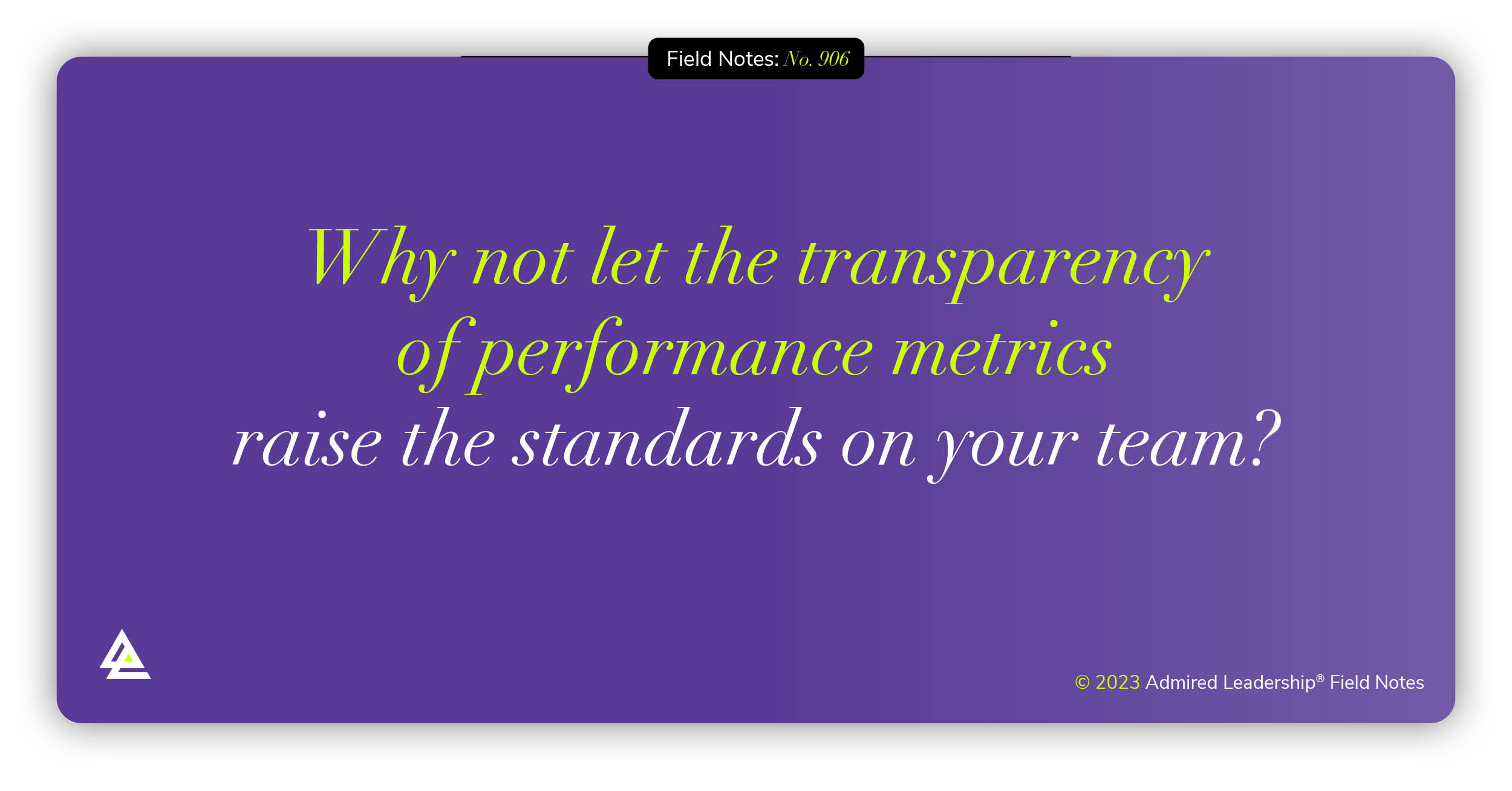
Make Individual Performance Transparent to the Team
The best leaders don’t discuss the metrics openly with the team, but rather let the numbers do the talking. They get to spend more time helping low performers develop a plan for success and less time arguing over perceptions of high performance that have long since lapsed. Truth be known, the pressure to perform is…
-
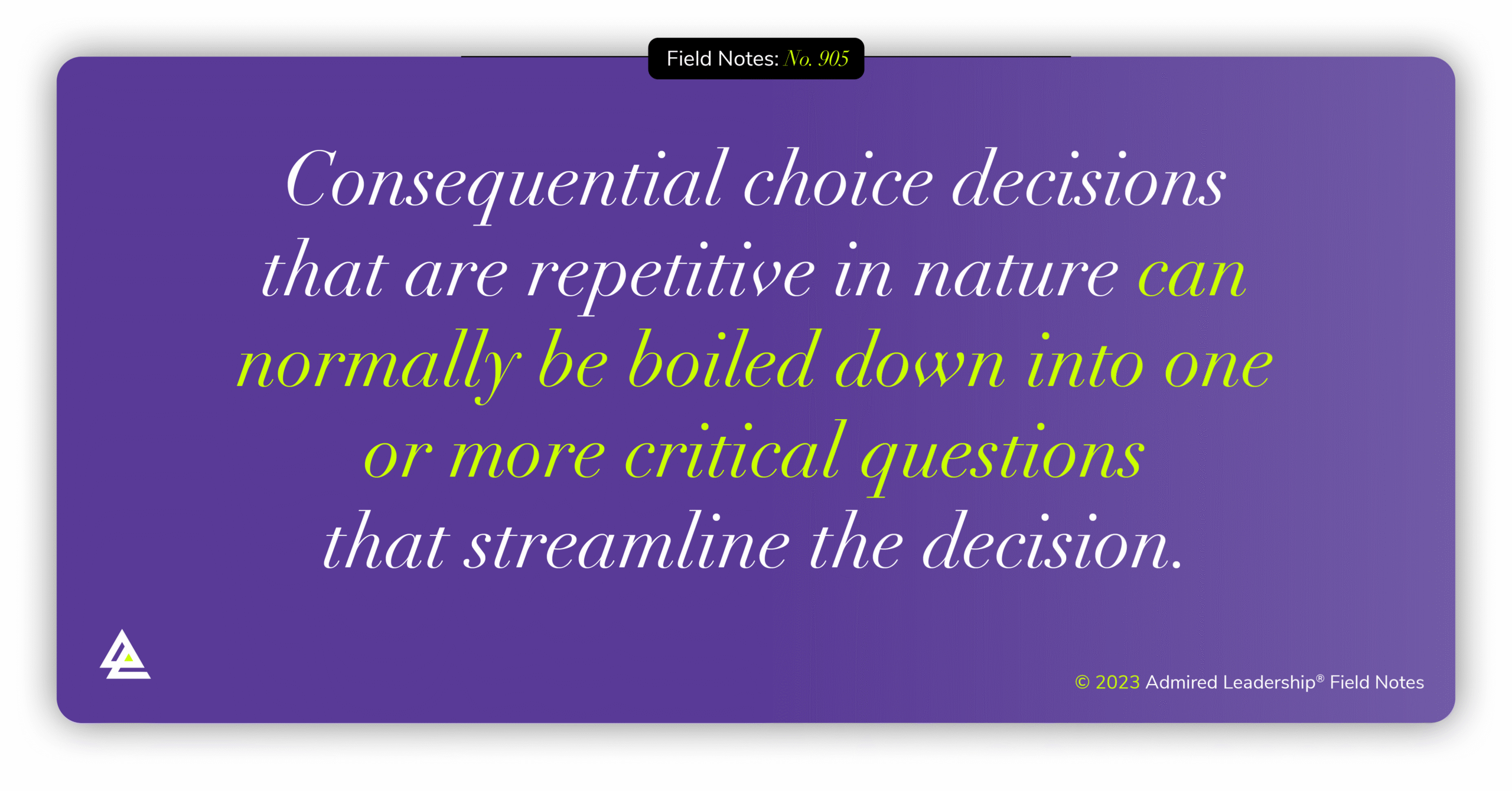
When it Comes to a Critical Choice, Ask an Equally Critical Question
Consequential choice decisions that are repetitive in nature can normally be boiled down into one or more critical questions that streamline the decision. It is the goal of any leader to use their experience and wisdom, matched with data, to determine what those questions are. Whether the choice is to decide who gets the new…