




FieldNotes
Our daily Field Notes email is just the kind of jumpstart you need. A fast read. Maybe less than a minute. Because sometimes it just takes one insight to change the trajectory of the day.
Search Field Notes
-
Tolerate People Until You Don’t Have To
The moment they don’t have to tolerate a team member who needs to go, good leaders pull the trigger. They don’t wait a second longer. No leader on earth has ever uttered the words, “I should have waited longer to terminate that person.” But practical realities prevail. So, the best leaders stage the exit and…
-
Mid-Point Adjustments Can Be the Winning Strategy
Mid-Point Adjustments Can Be the Winning Strategy. Aside from sports, too many leaders fail to adjust their strategy and game plans mid-stream to the detriment of a great result. Short-term adjustments are the key to long-term success. Even small or tiny adjustments can affect the outcome. So, remember that, as the truth presents itself, good…
-
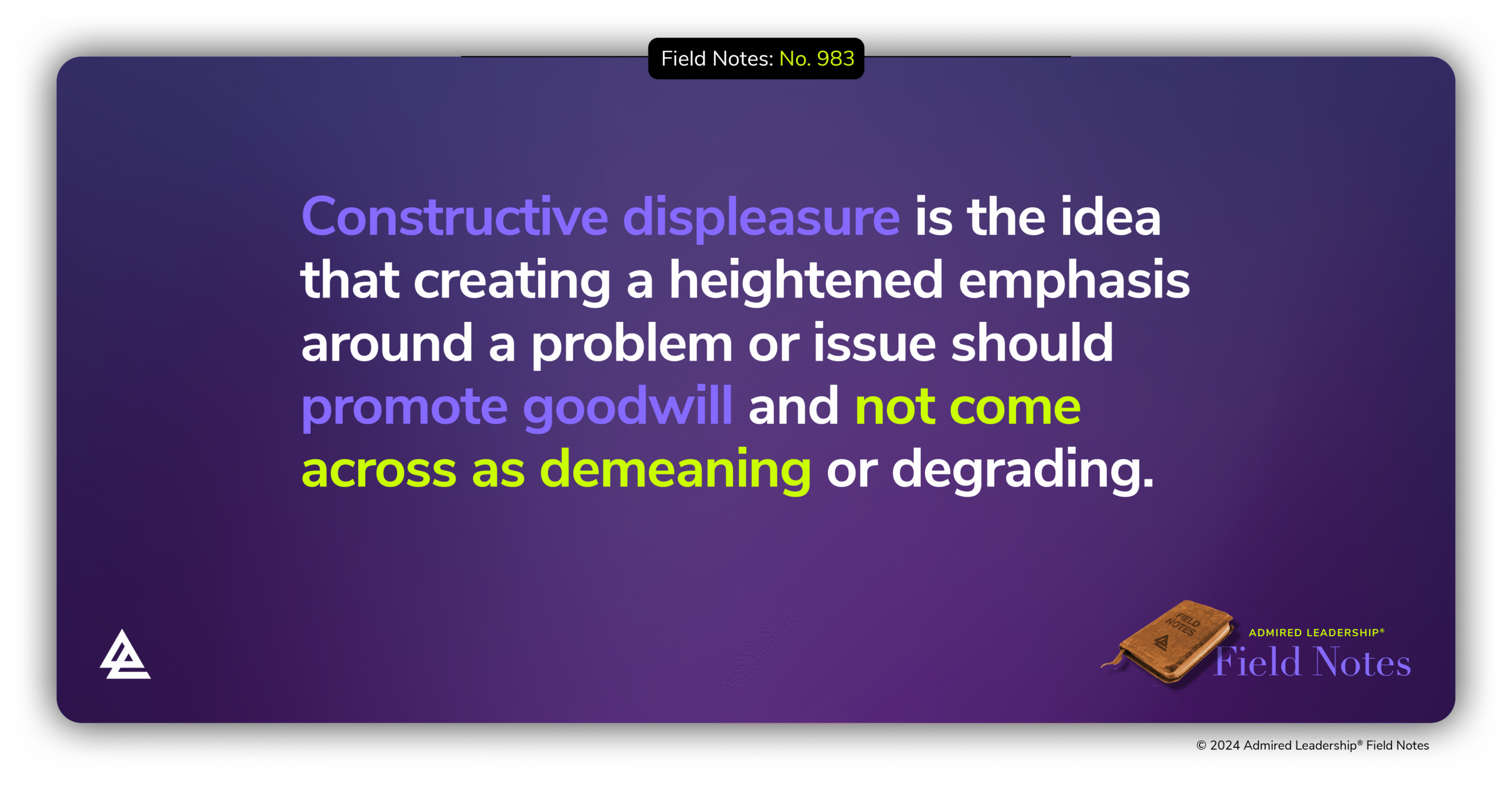
Communicating Constructive Displeasure
For teams, it sometimes takes a mild spectacle to get everyone to appreciate the seriousness of the message. But leaders who do so must find a way to elevate the displeasure constructively without embarrassing or humiliating anyone. Displeasure never needs to be unkind.
-
Thinking About the Consequences in the Moment of Decision
Thinking About the Consequences in the Moment of Decision. Every decision is connected to positive and negative consequences, some intentional and others unexpected. Thinking through the possible consequences and implications of a decision is something all good decision-makers do. However, it is important to know when to leave the consequences aside and let the facts…
-
Team Members Who Are Always Late
But a team member with a well-earned reputation for lateness must be dealt with. This starts with an understanding that being on time is completely within the team member’s control. From there, good leaders make it clear that lateness reflects one of two essential problems. Either the team member believes what the team is doing…
-
Momentum and the Gambler’s Fallacy
If you’re watching the Super Bowl today, here’s something to look for. When a big break and masterful execution result in newfound confidence, a team or player often experiences a change in their energy and positivity. Good teams and players seize on this good fortune and work to execute even more precisely. When more good
-

On Winning Versus Succeeding
People like to compete to test their skills and smarts. When up against a worthy opponent, they play to win. In the words of Red Auerbach, “If you’re going to keep score, win!” Winning promotes pride, confidence, and accolades. With victory comes the spoils. Everyone likes to win. But here’s a kick in the pants.
-
When Consensus Decision-Making Strangles an Organization
In order to encourage engagement, promote an inclusive culture and gain the buy-in critical to executing decisions, most contemporary organizations operate from the decision-rule of Consensus. Good leaders understand the value of bringing people along with a decision and how important it is for team members to influence the decisions that impact them. Building consensus
-
Working With a Trusted Advisor
Every Olympic athlete has a performance coach. Same for star performers in nearly every sport and competitive endeavor. More than 50 percent of the CEOs in Fortune 500 companies work with a trusted advisor or executive coach. That number rises to more than 80 percent of start-up and new business CEOs. Is this just a
-
A Speedometer for Change
Thinking through the pace of change is best aided by one critical question: How can we reduce resistance and increase acceptance through the speed of change? The answer changes at different points of time. The best leaders adjust the speedometer based on the conditions they see. They speed up and slow down depending on how…