




FieldNotes
Our daily Field Notes email is just the kind of jumpstart you need. A fast read. Maybe less than a minute. Because sometimes it just takes one insight to change the trajectory of the day.

Search Field Notes
-

Data Is Sometimes the Best Answer for Overcoming Resistance to Feedback
Some team members repeatedly resist the same feedback. They prefer to hang onto their self-view that the behaviors that derail them are not at issue. Others lack all awareness about what they do that negatively impacts others. They prefer their own wise counsel and pay little attention to what others suggest. As a result, they…
-
Apologizing for Other People’s Bad Behavior Underscores Your Values
When people observe others behaving poorly, rudely, or inappropriately, they typically shake their head and ignore the episode. Unless they know the transgressor well enough to predict their reaction to being confronted, most won’t take the chance to intervene. But that doesn’t mean there isn’t something else they can do. Apologizing to the recipient of
-
The Essential Ingredients of a Highly Engaging Team Offsite
Running a great offsite is no easy task. Team members want to be fully engaged and spend the time productively. But they also want to have fun and get the chance to converse with other team members in a relaxed atmosphere. Naturally, when asking the team to set aside time away from the work setting,…
-
Delivering a Tough Message About Their Flaws Starts With Your Flaws
Some team members don’t know themselves well and fight the same demons on many days. They need to come to grips with the character flaws that make them less effective than they should be. Some are too reactive, others too emotional, some lack clear values, others live in a state of anxiety. Some are too
-
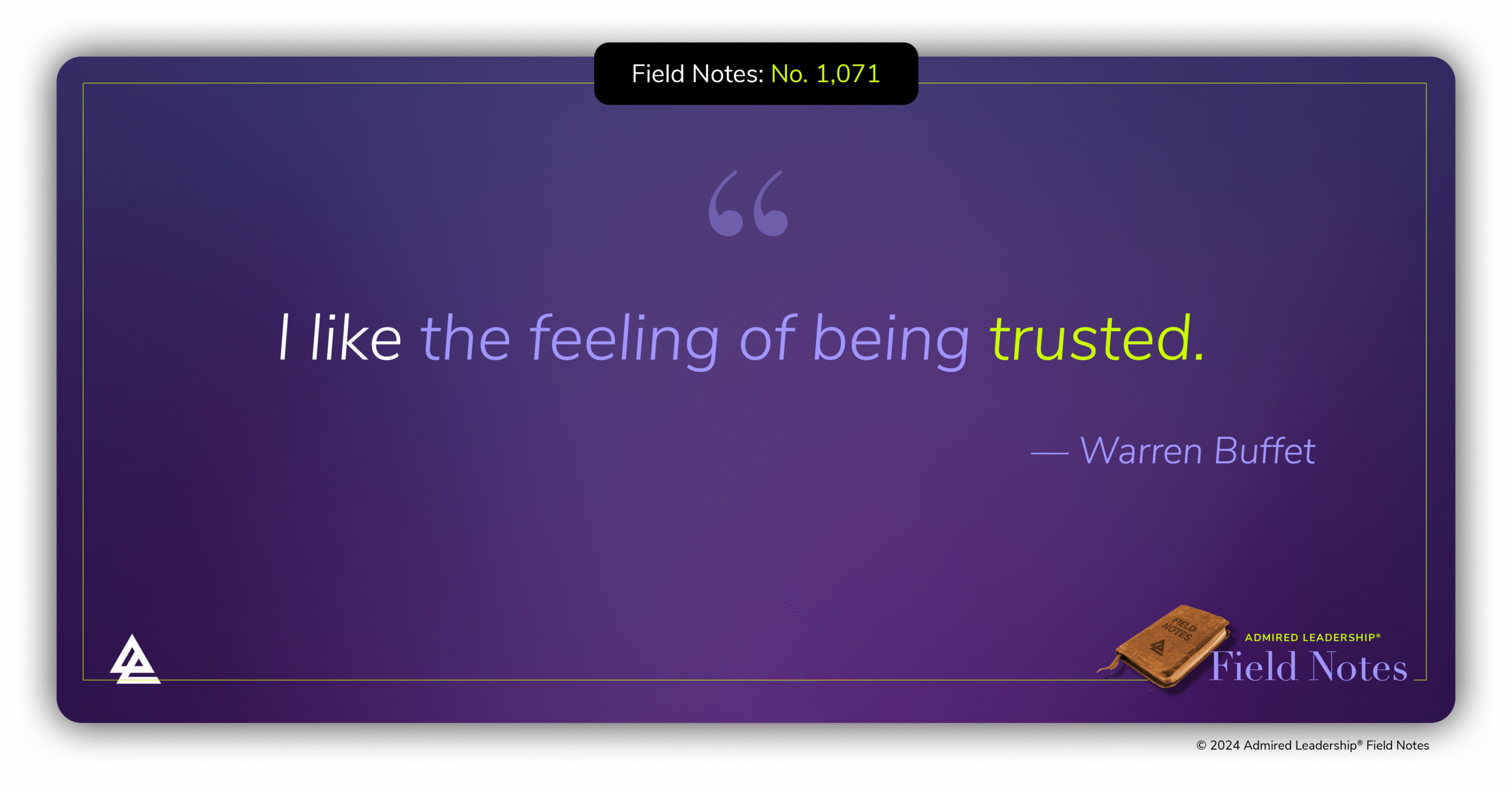
The Feeling of Being Trusted
Legendary investor Warren Buffett was recently asked why he still enjoyed investing money for others. He replied, “I like the feeling of being trusted.” That statement explains a lot about Buffet and captures a feeling many leaders value but rarely articulate. Many of the most admired leaders in the world build their lives and reputations…
-
The Pain of Discipline or the Pain of Regret
The key to enhancing discipline is to engage in honest self-review. Leaders must objectively call out where they lack important self-control and how they might find it. Knowing where in your leadership life your personal discipline is lacking is a great place to start. What can you do to create the willpower to set higher…
-
In a New Role, Achieve Clarity With a DON’T DO List
The Don’t Do list creates a clarity of role that can’t be achieved by the Do list alone. Thankfully, leaders can explore both question sets and avenues to identify how others see the task ahead and to define expectations more precisely. The next time you take on a new role or assignment, consider asking the…
-
The Teaching Power of a Double Demonstration
By definition, high performance is a demonstration of skill. When a more experienced leader is willing to humbly compare and contrast their skill to those of others, they show them a path forward that otherwise remains hidden from view. Exposing the assumptions, choices, and strategies of high performance is a lens into learning like none…
-
How Self-Aware are You?
Being self-aware changes how a leader learns, navigates the world, and influences how they behave. The more self-aware a leader is, the more likely they can adjust their behavior and thinking to fit a situation. If there were only one quality from which to predict lifetime success, self-awareness would have to be on the shortlist.
-
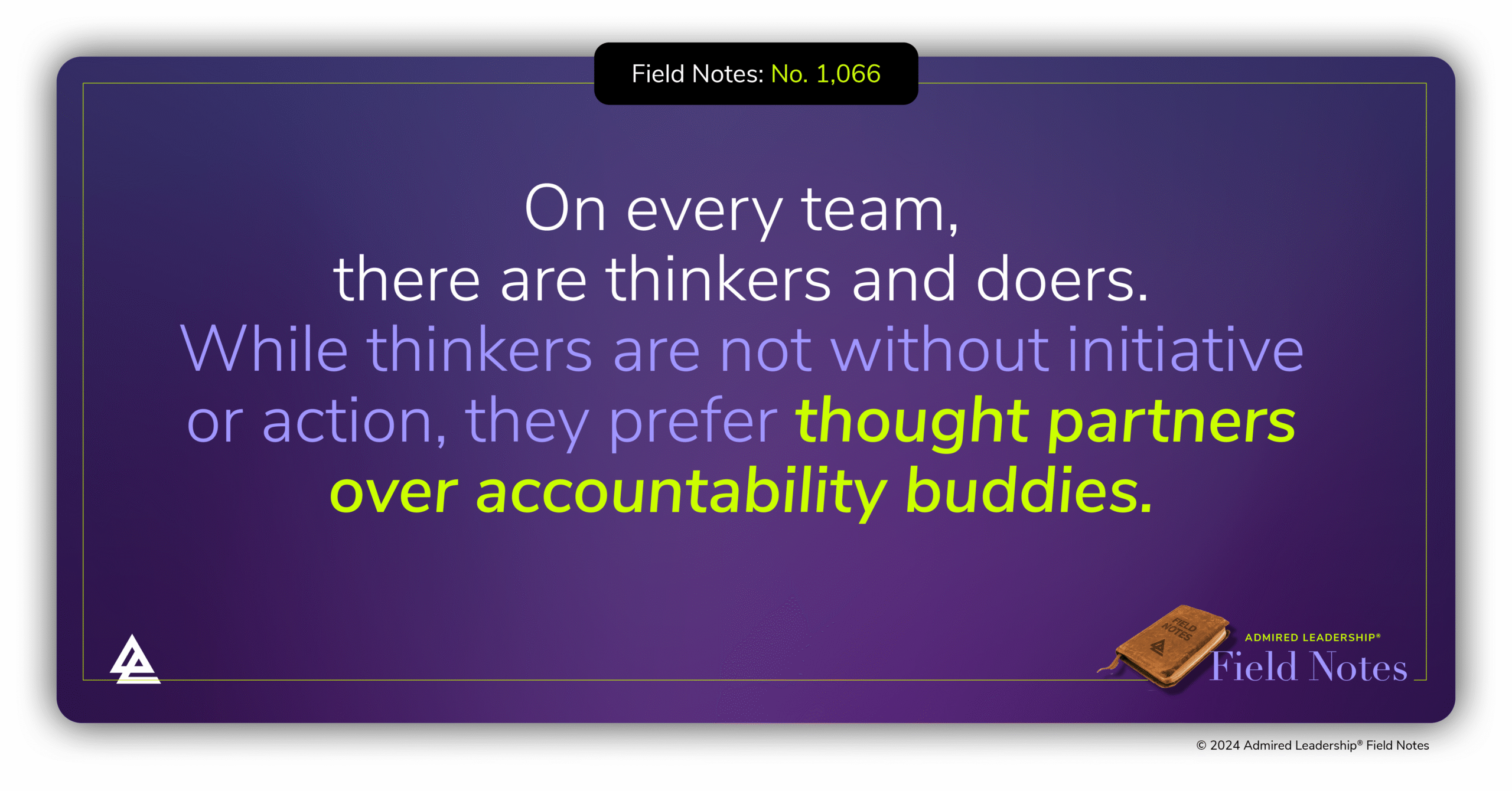
Thinkers and Doers
On every team, there are thinkers and doers. Thinkers like to contemplate problems and issues and devise strategies to address them. While thinkers are not without initiative or action, they prefer thought partners over accountability buddies. They take steps cautiously and deliberately. Doers, on the other hand, like to get things done. They don’t bypass…