




FieldNotes
Our daily Field Notes email is just the kind of jumpstart you need. A fast read. Maybe less than a minute. Because sometimes it just takes one insight to change the trajectory of the day.

Search Field Notes
-
Saying Nothing Usually Makes Things Worse
It’s somewhat astonishing how often leaders say they stand for honesty and integrity but refuse to deliver a tough and candid message to a colleague. It’s as if they believe telling people the truth only applies if the message won’t be received poorly or defensively. Delivering a tough message to a colleague isn’t easy for…
-
A Leader’s Job Is to Create Positivity, No Matter Where They Find Themselves
If Václav Havel could do so inside the walls of a prison, so can any leader without such draconian constraints. No matter how poisonous the workplace is, team leaders carry the antidote for their team with their decisions, rewards, behaviors, and messages. As famed motivational speaker Zig Ziglar liked to say, “Don’t let negative and…
-
Good Leaders Erase Doubt
Good leaders work hard to erase the ongoing and natural doubts team members have. It’s a critical aspect of being an effective leader. Even minor doubts can fester and shape the everyday reality of a team. So, good leaders do their best to openly address them before they turn into full-fledged skepticism. In the words…
-
Knowing What Battles Are Worth Fighting
Famed psychologist Carl Jung first pointed out this insight. He suggested that what irritates us usually serves as a mirror, reflecting our own values, beliefs, and insecurities. Most commonly, what bothers us connects with our core values. For instance, if rudeness irritates us, it typically indicates we view respect and politeness as critical priorities. Whatever…
-
Developing a Shooter’s Mentality
Famed psychologist Carl Jung first pointed out this insight. He suggested that what irritates us usually serves as a mirror, reflecting our own values, beliefs, and insecurities. Most commonly, what bothers us connects with our core values. For instance, if rudeness irritates us, it typically indicates we view respect and politeness as critical priorities. Whatever…
-
Whatever Irritates You Can Lead to a Deeper Understanding of Yourself
Famed psychologist Carl Jung first pointed out this insight. He suggested that what irritates us usually serves as a mirror, reflecting our own values, beliefs, and insecurities. Most commonly, what bothers us connects with our core values. For instance, if rudeness irritates us, it typically indicates we view respect and politeness as critical priorities. Whatever…
-
A Great Decision Without Vigorous Execution Might as Well Be a Lousy Decision
Weaknesses are the beat of a drum that everyone notices. They stand out like a bad note in an otherwise beautiful melody. By definition, weaknesses get in the way of effectiveness and dilute the best qualities people display. So, people naturally take aim to fix them. But weaknesses are highly resistant to change. They don’t…
-
Drown Out a Weakness by Amplifying a Strength
Weaknesses are the beat of a drum that everyone notices. They stand out like a bad note in an otherwise beautiful melody. By definition, weaknesses get in the way of effectiveness and dilute the best qualities people display. So, people naturally take aim to fix them. But weaknesses are highly resistant to change. They don’t…
-
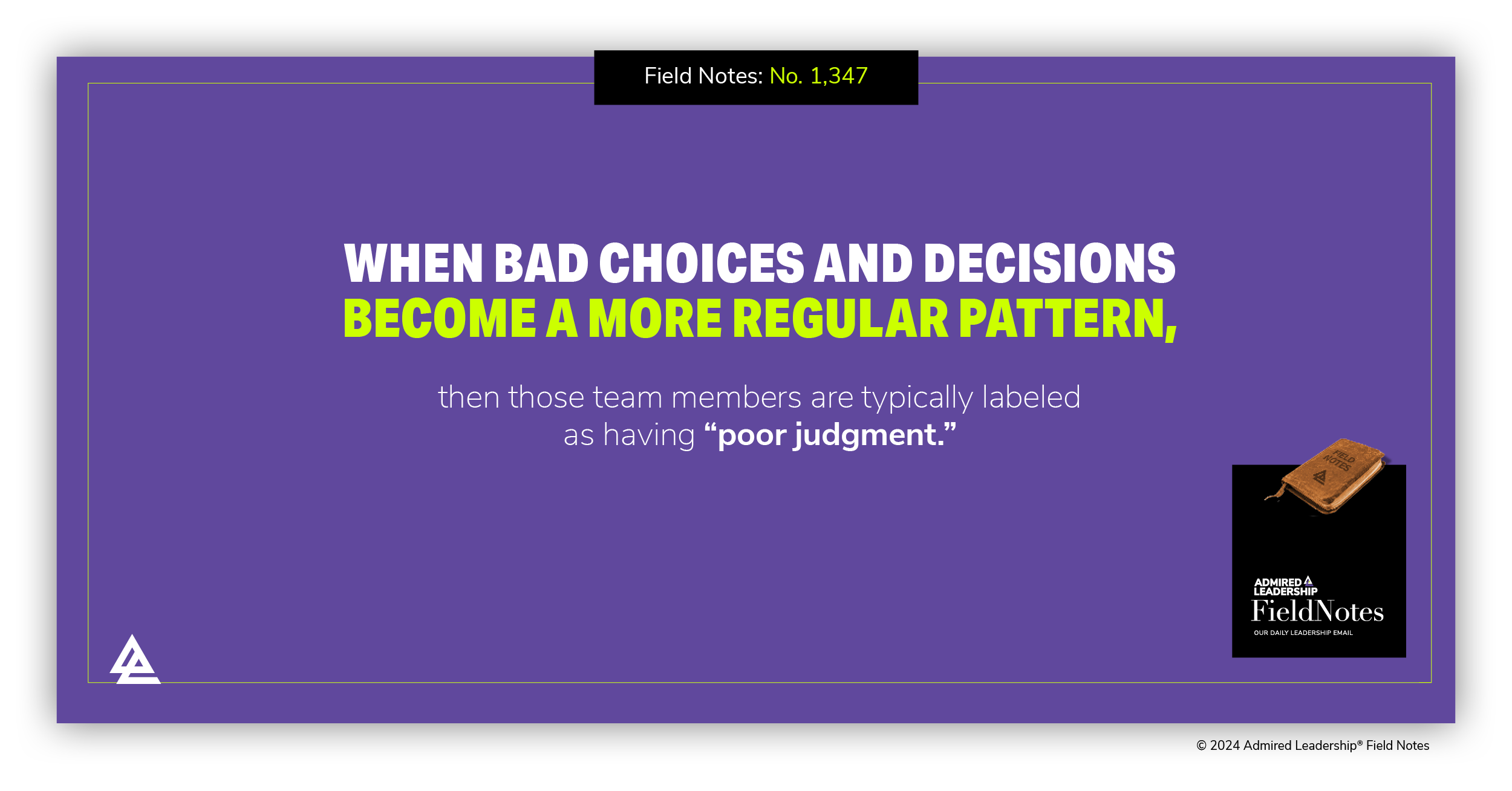
Why Do Some People Have Poor Judgement?
After making a bad choice, team members are often told by the leader that their judgment was “off,” suggesting they need to make a better decision next time. When bad choices and decisions become a more regular pattern, then those team members are typically labeled as having “poor judgment.” Such a reputation can be devastating…
-
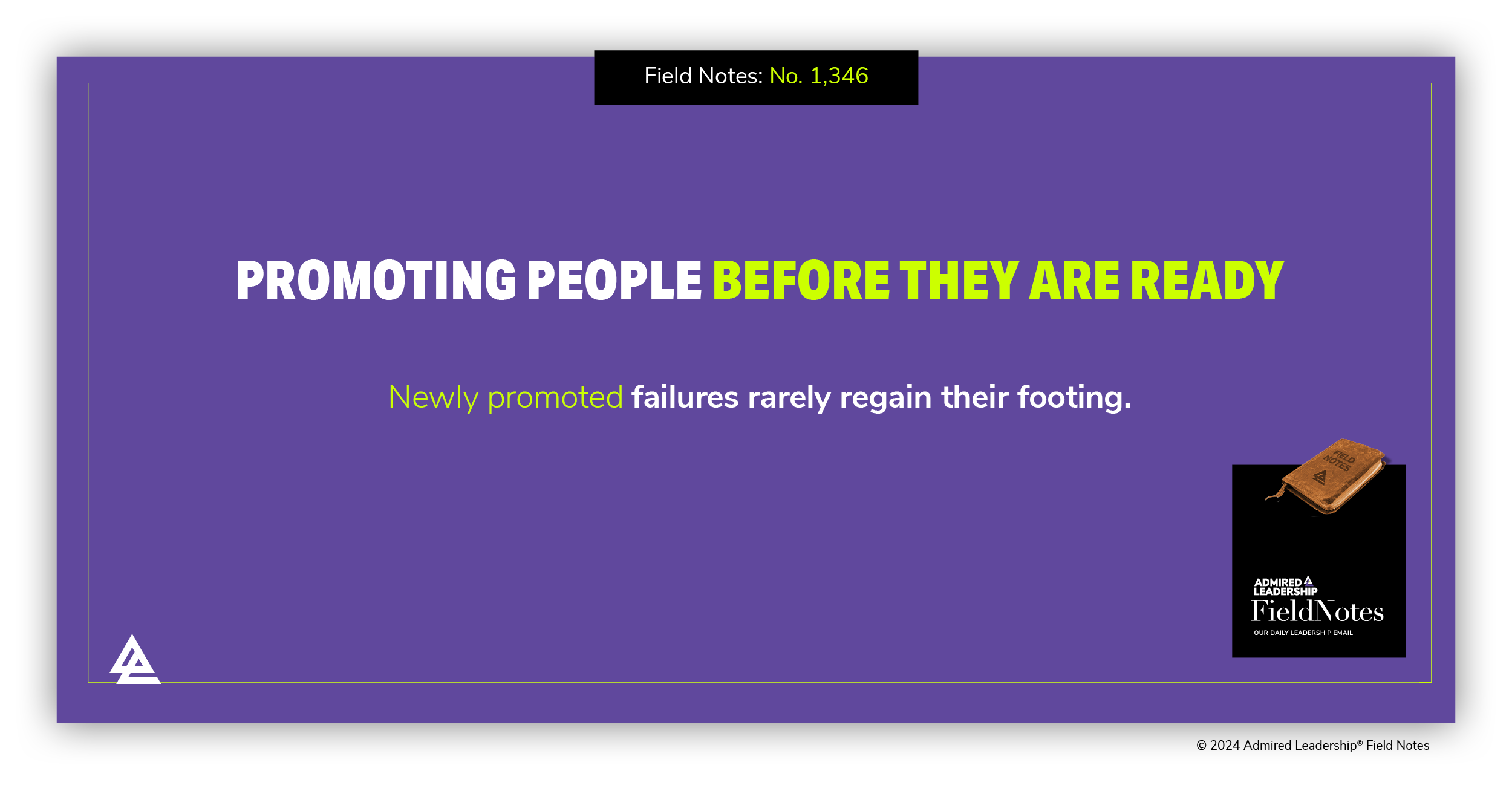
Promoting People Before They Are Ready
Before promoting people into a higher role or one with more responsibility, the best leaders consult a checklist of requisite questions. Do they have the foundational skills and experience to succeed? Will others around them celebrate their promotion and work hard to make them successful? Do they have the judgment necessary to make quality decisions…