




FieldNotes
Our daily Field Notes email is just the kind of jumpstart you need. A fast read. Maybe less than a minute. Because sometimes it just takes one insight to change the trajectory of the day.

Search Field Notes
-

Making Your Own Luck
Essentially, all decisions are bets. If luck weren’t involved, the best poker players would win every time. The same is true for leaders. If not for chance and unpredictable influences, the smartest leaders would always make the right decision. For decision-makers, luck is either a negative, or a necessary ally. The best decision-makers strike a…
-

Good Leadership Is Priceless
As a boy, consumer activist Ralph Nader remembers his parents quizzing him about the cost of groceries. They asked him the cost of a carton of eggs, a loaf of bread, a gallon of milk, and a bag of potatoes. Each time, Nader answered his parents correctly. Then, they asked him the price of the
-

Avoiding Backhanded Compliments
Often without intention, leaders offer compliments that are insulting. Couching a hard truth in less-than-genuine praise is the very definition of a backhanded compliment. Funny enough, when people receive compliments laced with insult, they often respond positively — until they get the chance to think through what was actually just said. Then they seethe,
-

Be Reluctant to Offer Delicate Feedback
Getting others to ask for feedback that will likely sting seems like an impossible task. This is especially true when the person in question is unaware of the criticism, or when the information will be viewed as delicate or sensitive. Letting team members know we have important feedback but are reluctant to share it is…
-

What Relationships Do I Need to Invest In?
Leaders like to think they intuitively know what issues are most important to focus on to improve their effectiveness. Critical relationships are often missing from this list. Knowing what relationships to invest in more heavily is a leg up towards making the team more effective. The quality of a leader’s relationships is an unequaled measure…
-

The Affirmative Reprimand
An Affirmative Reprimand makes it clear the infraction was a serious misstep, but also creates an expectation that the error in judgment will not occur in the future. When a team member feels supported by the prediction of a better future, they hear the reprimand as a line in the sand they dare not cross…
-
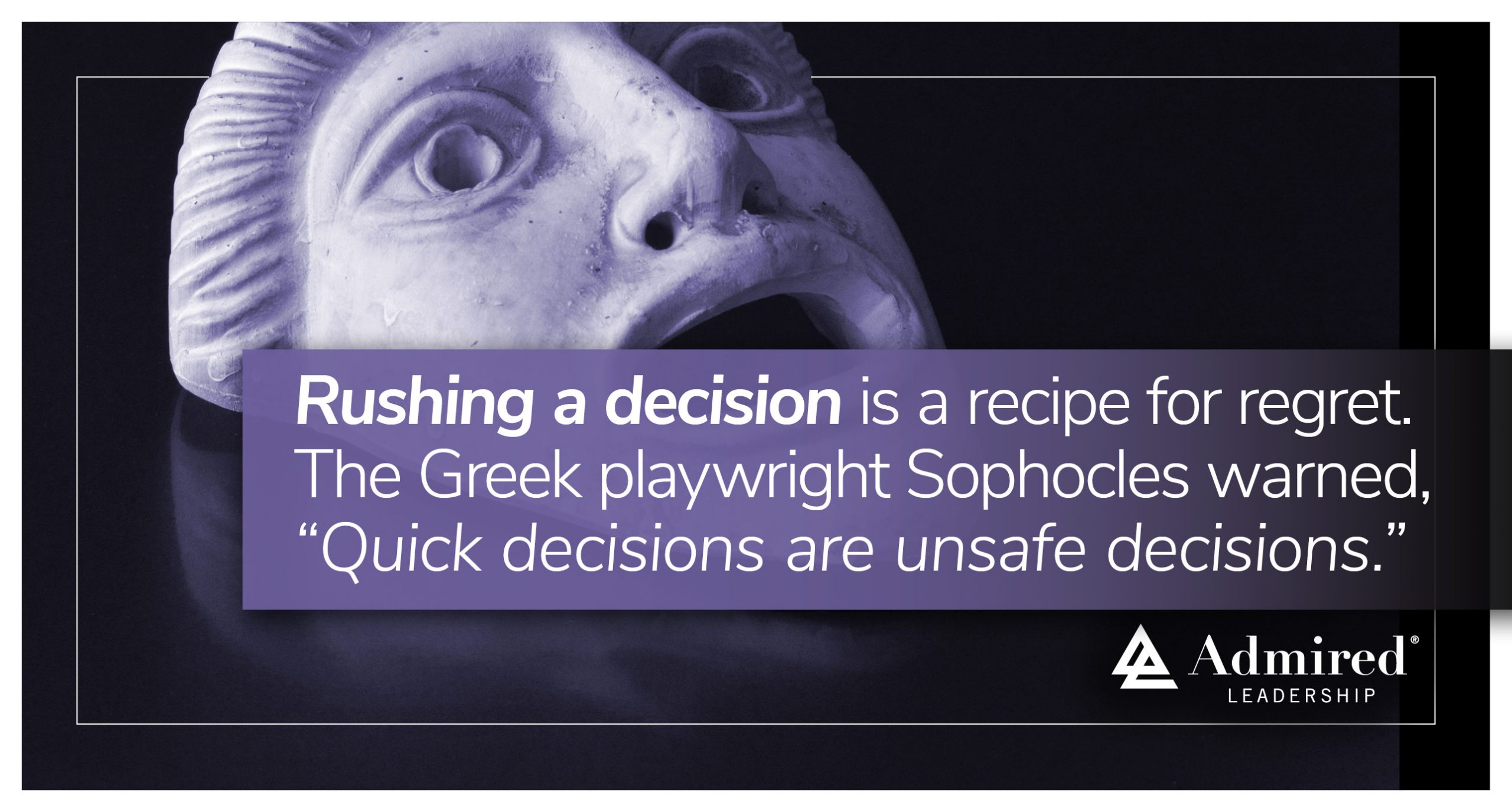
If You Need an Answer Right Now, the Answer Is “No”
As the Greek playwright Sophocles warned, “Quick decisions are unsafe decisions.” In reality, it’s not the fast decision that is the real problem. Instead, it is the request for an immediate decision that creates the resistance.
-

The Fear of Missing Out
Leaders who feel overwhelmed and less effective than they should be often suffer from FOMO—the fear of missing out. The idea of missing out on an opportunity or experience others are enjoying becomes a fixation and a distraction for those under water. Instead of prioritizing existing projects and tasks, they double down and take on…
-

Should Leaders Seek Certainty or Clarity?
Should Leaders Seek Certainty or Clarity? When leaders believe they can know the outcome of a decision with absolute certainty, they ride a false sense of security. Despite the fact that achieving certainty about a decision result is nearly impossible, leaders often set their sights on this lofty goal.
-
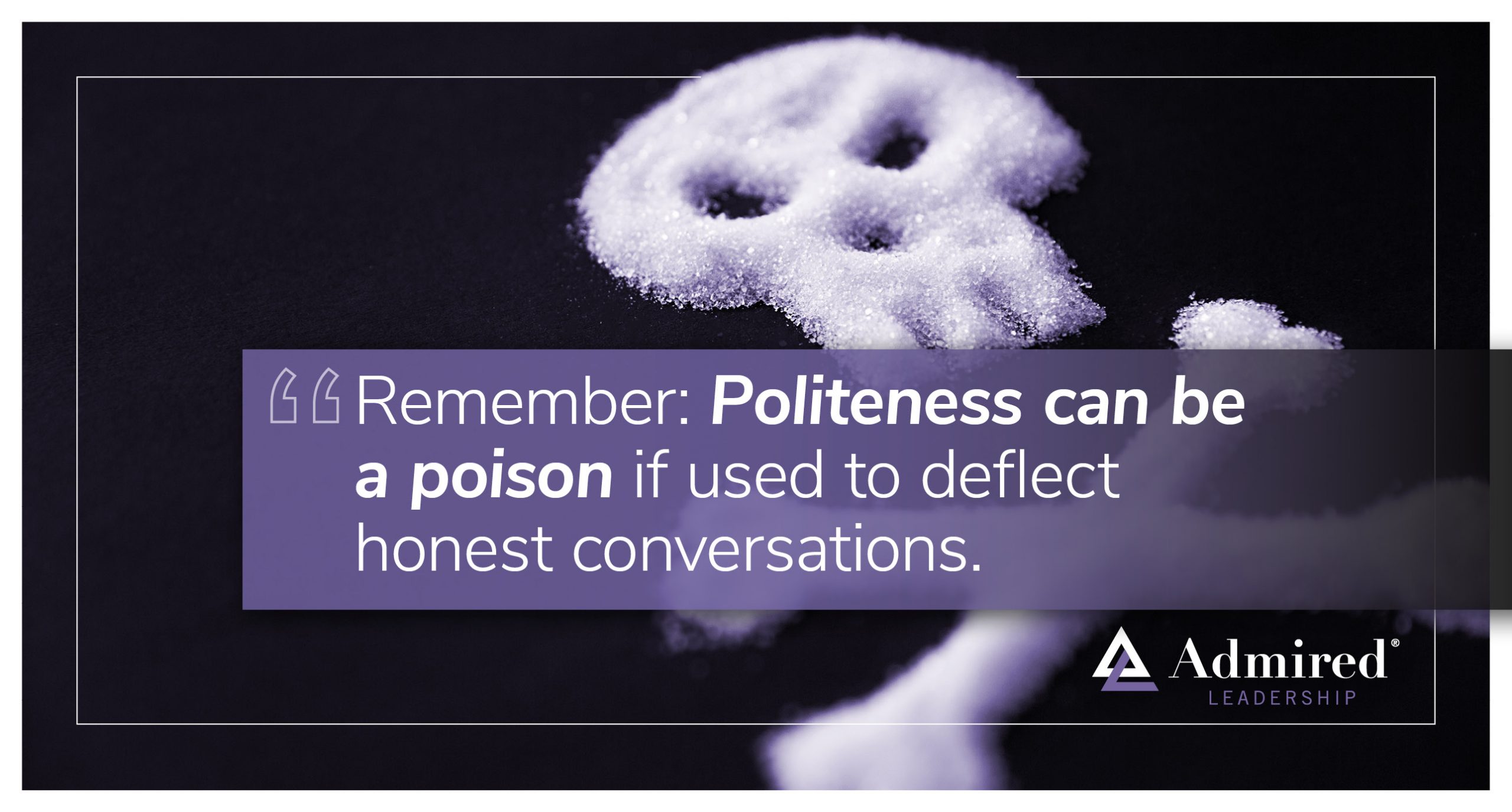
A Tyranny of Niceness
A Tyranny of Niceness. Some leaders and team cultures will go to great lengths to avoid candid feedback and honest conversations about performance. With time, team members learn that being nice is rewarded far more than being frank.