




FieldNotes
Our daily Field Notes email is just the kind of jumpstart you need. A fast read. Maybe less than a minute. Because sometimes it just takes one insight to change the trajectory of the day.

Search Field Notes
-

Coping With the Loneliness of Leadership
At times, leadership can be a tremendously lonely experience. The emotional fallout of making difficult decisions that negatively affect the lives of some team members, the feeling of rejection when team members leave for other opportunities, and the discomfort of disappointing passionate team members who offer ideas that can’t be executed in the moment, among
-

Say More
While this sounds trivial, asking others to “say more” is a masterful pathway to better listening … and much more. When leaders ask others to expand upon a point, they enhance clarity and buy themselves the time to respond in the most persuasive way. Better yet, they encourage others to be complete and make the…
-
What Is the Ideal Team Size for Getting Things Done?
For leaders, the question to ask and answer is: What composition of 4-6 people would give us the best chance to achieve this task with excellence? Weaving the synergies between large and small teams is commonplace for the best leaders. They include more people in the conversation while getting important things done in smaller teams.…
-

Not All Good Ideas Can Be Executed
Not All Good Ideas Can Be Executed. We all have that pair of shoes in our closet. We like the look of them. They match our style. They are made with quality. But, unfortunately for us, they don’t fit. Every once in a while, we take them out and try them on, one more time.…
-

Leaders Can Always Make a Bad Decision Worse
We often compound mistakes by following them with disastrous choices. Decision-makers who follow a bad decision with an equally bad choice — or worse — usually do so for one of two reasons. They are distracted by the earlier misstep and are not thinking clearly, or they are attempting to recover by making a risky
-
Having the Hardest Conversations Requires the Deepest Caring
With a fresh start and a new set of colleagues who are not tainted by past underperformance, good things can happen. Suggesting they find a role that matches their skills is yet another hard conversation to have. But that’s what truly caring leaders do. They want what is best for people and sometimes what is…
-
Ask Everyone to Come Prepared to Meetings, Including Yourself
Understanding the issues well enough to reach thoughtful conclusions in the span of a single meeting requires planning. Too much information overwhelms team members and is impractical. Any time a meeting requires hours of prep time, it is an indication that a single meeting is not sufficient. Spending an hour or less to prepare for…
-

Strengthening the Skill of Pattern Recognition
The chain reaction of pattern recognition draws upon both stored experience and objective observation to give relief to otherwise random information. The best leaders are astute observers who are always looking for new patterns. They get this way by choice and intention. The more a leader searches for patterns, the better they get at recognizing…
-

Trust People by Giving Them the Toughest Assignments
Delegating a difficult problem doesn’t mean leaders just walk away and watch from the sidelines. In fact, good leaders stack the deck and make sure the assignment will succeed in some measure by serving as a resource and checking in with whatever help the team member needs. Building trust is never easy. Using the hardest…
-
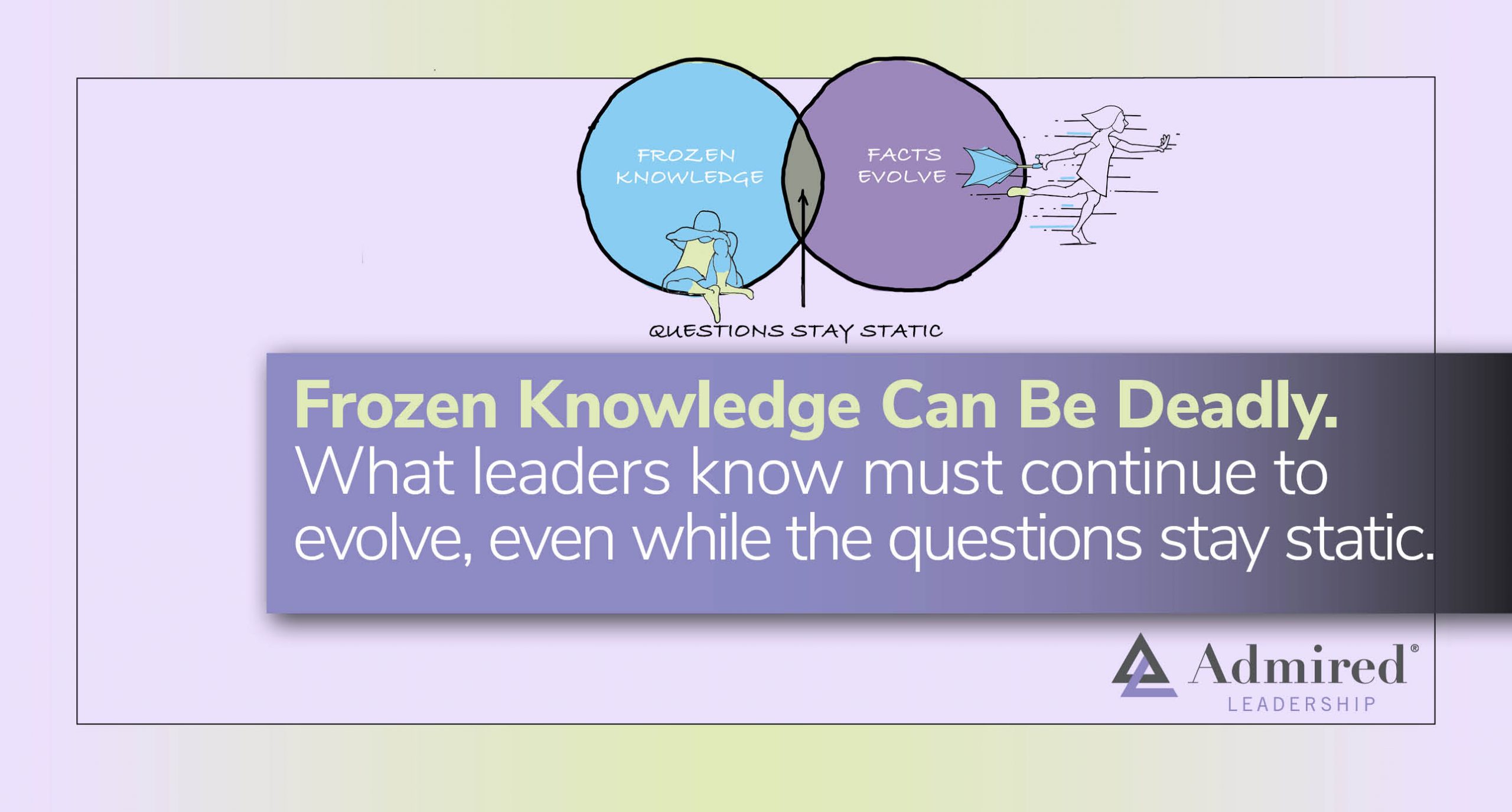
Frozen Knowledge Can Be Deadly
Fighting the urge to keep our beliefs and facts stagnant is what smart leaders do. Write down the key facts and assumptions you operate from and spend a little time reading and listening to subject-matter experts about them. You might be surprised at how much has changed since you last put those facts in your…