


Just like people, organizations sometimes lose their way.
Because of poor leadership, organizations can drift toward mediocrity, underperformance, and dysfunction.
To revive them, leaders need to reset the culture and establish a new way for team members to work together.
Transforming a culture takes time and focus.
Changing the levers that affect how people behave and get things done within the organization requires leaders and team members to adopt a whole new way of thinking and acting.
This challenging makeover depends on the consistency and commitment to a different set of values, practices, and norms. This typically takes several years to complete.
Thankfully, leaders have an army of consultants, books, and practitioners ready to assist them in the effort.
But before embarking on a significant cultural change or shift, the best leaders first ask a fundamental question essential to the future: What shouldn’t change?
More precisely, they ask and answer questions like:
- What long-standing and existing values are core to our success and shouldn’t change?
- What existing practices and norms must be safeguarded for the organization to thrive in the future?
- What symbols, rituals, and traditions carry the history forward and shouldn’t be abandoned?
Deciding what not to change or what should be maintained is a critical first step in a successful transformation effort.
It’s a decision that leaders too often fail to incorporate into their change planning. This leaves the organization vulnerable to discarding many of its longstanding strengths.
Beginning the change process by identifying what shouldn’t change creates the stability, trust, and clarity people need to embrace the new workplace.
Maintaining some core values can anchor the transformation in the organization’s history and identity. This reinforces the commonsense idea that some strategic assets and cultural elements are too important to relinquish.
Knowing what stays constant sets the foundation for ground-breaking change.
Leaders who first decide what elements of the culture should never change are best prepared to move boldly into the future while preserving the unique strengths of the past.
A new and effective culture honors history and distinction before charting an imaginative path forward.

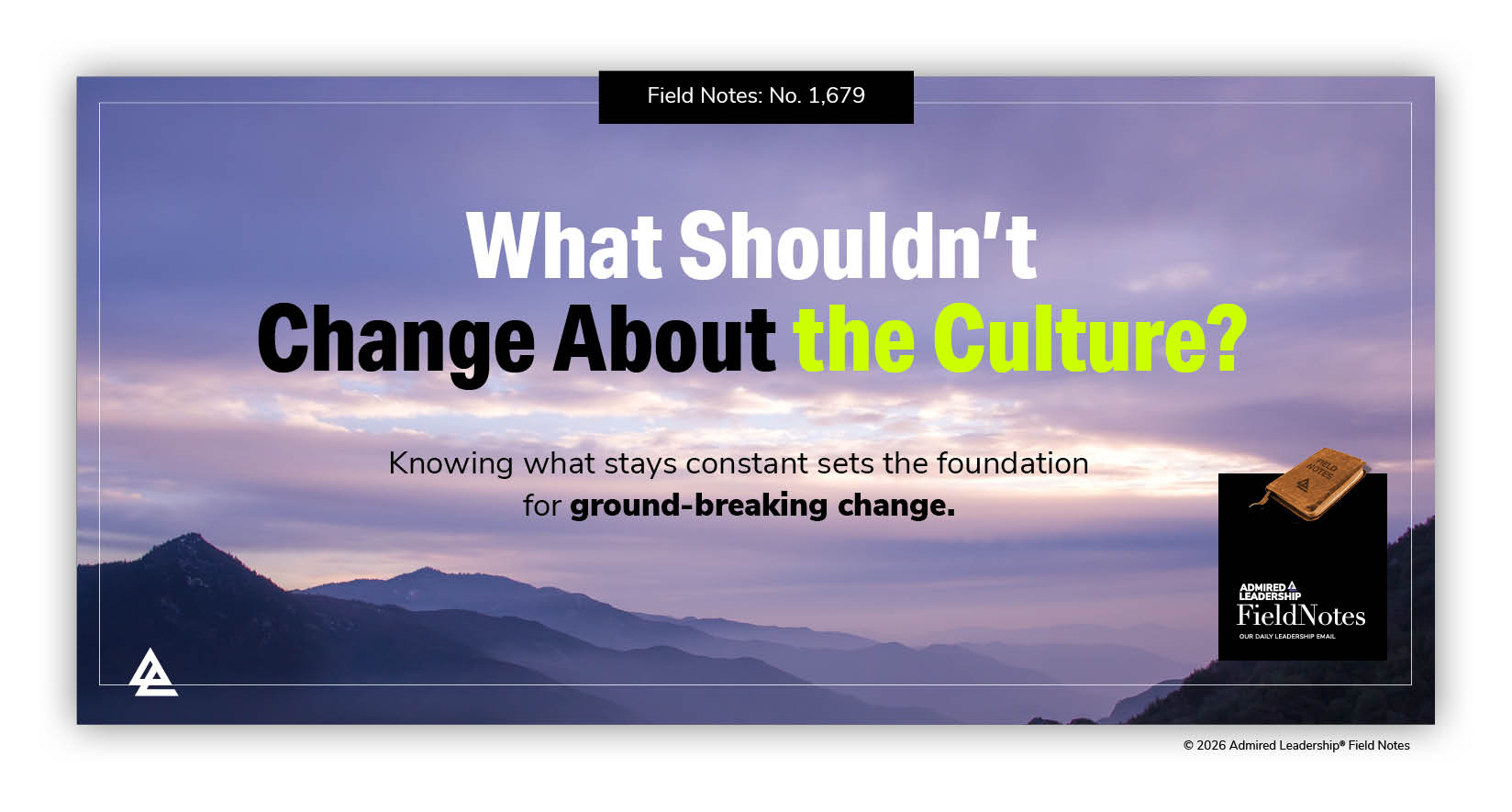
What Shouldn’t Change About the Culture?
SHARE:
Sign-up Bonus
Enter your email for instant access to our Admired Leadership Field Notes special guide: Fanness™—An Idea That Will Change the Way You Motivate and Inspire Others.
Inspiring others is among the highest callings of great leaders. But could there be anything you don’t know, you haven’t heard, about how to motivate and inspire?
Could there really be a universal principle that the best leaders follow? A framework that you could follow too?
There is.
Everyone who signs up for Admired Leadership Field Notes will get instant access to our special guide that describes a powerful idea we call Fanness™ (including a special 20 minute video that really brings this idea to life).